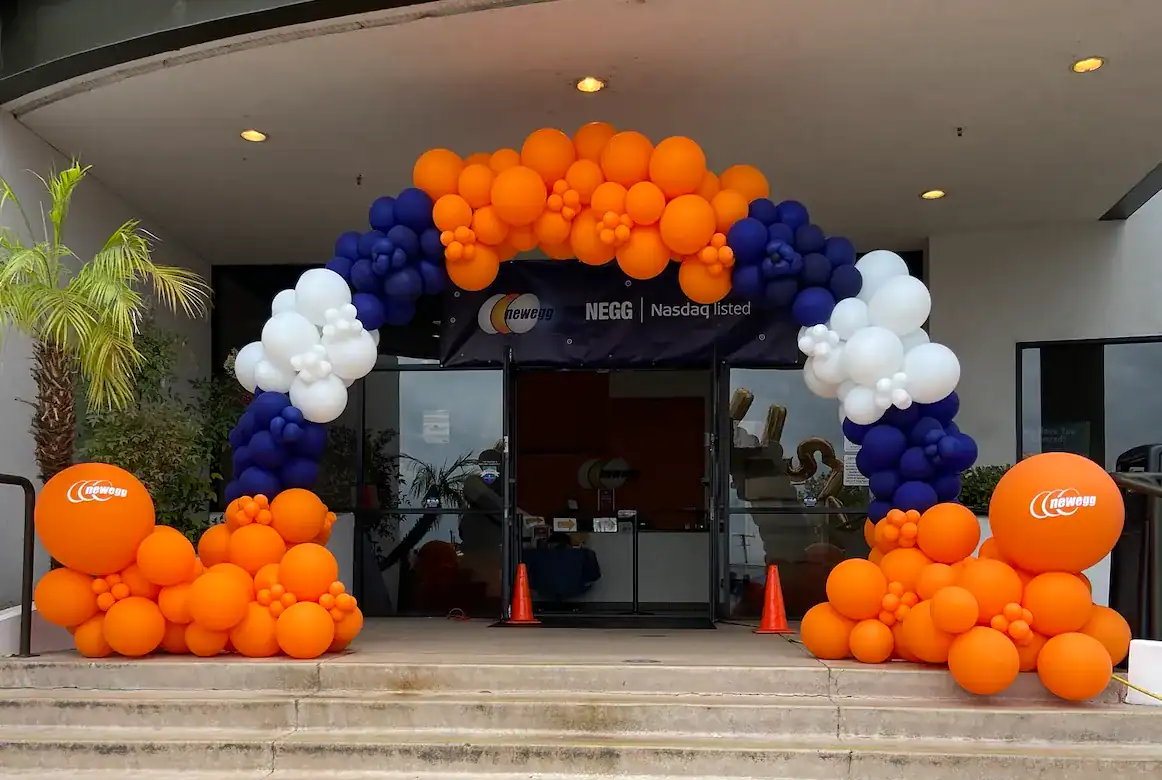



Balloons are one of the most joyful things you can add to a space. We’ve seen that firsthand, from intimate birthday parties to large-scale activations for clients like Nike and Vogue, including brand activation balloon installations across Los Angeles. But once the party’s over, most people have no idea what to do with them. Toss them in the trash? The recycling bin? Leave them for someone else to deal with?
It turns out, balloon disposal is more nuanced than it looks. And as a custom balloon installation company that works at scale, we think it’s worth getting it right. This guide covers everything you need to know about how to recycle balloons, from latex to foil, and everything in between.
Not all balloons are created equal. And before you can dispose of them responsibly, you need to know what you’re working with.
Latex balloons come from natural rubber tree sap. They’re the classic kind; stretchy, air- or helium-filled, and by far the most commonly used type at events. They’re often marketed as “biodegradable,” which is technically true but significantly more complicated than it sounds. More on that below.
Foil balloons are made from metalized polyester plastic. They don’t biodegrade. But they’re also more durable, which means they can often be deflated, stored, and reused multiple times before they need to be discarded. That reusability is actually their biggest environmental advantage.
Latex comes from natural rubber tree sap, which means it will break down over time. But “biodegradable” doesn’t mean “disappears overnight.” Depending on environmental conditions, it can take months to years for latex to fully decompose. So while latex is the more earth-friendly balloon material, proper disposal still matters.
Tossing a latex balloon in the trash is fine as a last resort. But there are better options.
TerraCycle offers a dedicated latex balloon recycling pouch, a mail-in program where you collect deflated latex balloons and ship them to be properly processed. It’s not free, but it’s the most responsible disposal option currently available for latex balloons. Balloon Mission also partners with TerraCycle through a Zero Waste Box that accepts deflated balloons, ribbons, and other party decorations.
If a mail-in program isn’t practical for you, the next best option is straightforward: deflate the balloon completely, cut it into smaller pieces to reduce any wildlife risk, and dispose of it in your regular trash. It’s not glamorous, but it’s safer than releasing balloons outdoors or leaving them to become litter.
And please, never release latex balloons into the air. Even outdoors, research shows that released balloons can travel 43 miles or more before landing, and about 81% come back down intact. That means they land in oceans, waterways, and wildlife habitats, where they’re frequently mistaken for food by marine animals.
Foil balloons can’t be composted, but they have two things going for them: they can be reused, and some specialized programs accept them for recycling.
A good quality foil balloon can be deflated and reinflated several times. If you’ve just used a foil balloon at an event, deflate it carefully, fold it flat, and store it for next time. Many shapes, stars, numbers, and letters hold up well across multiple uses.
Most curbside recycling programs don’t accept foil balloons because the metallic coating interferes with sorting machinery. But it’s worth calling your local recycling center directly, as some do accept them. You can also check whether the TerraCycle Party Decorations Zero Waste Box covers foil materials in your area. When in doubt, deflate fully and place in the trash rather than contaminating your curbside recycling bin.
One thing to know: foil balloons that escape outdoors are a genuine hazard. Metallic material conducts electricity, and foil balloons that hit power lines can cause outages and fires. Always keep them indoors or secured.
Before disposal, it’s worth asking whether the balloon has a second life.
Deflated foil balloons work surprisingly well as gift wrap for oddly shaped items, or as a reflective surface for DIY craft projects. Latex balloons, once deflated, can be used to patch small leaks in inflatable pool toys. And if you’re planning an event with kids, balloons in various states, flat, partially inflated, wrinkled, make for genuinely engaging art materials.
For larger events, if you’re working with a professional balloon decorator, ask them what they typically do with leftover balloon material after a build. A good decorator will have a plan. We do.
The most sustainable decision is often made before the event, not after it. A few things worth considering when you’re planning:
If you’re working with latex, look for balloons from manufacturers that disclose their material sourcing and avoid unnecessary additives. Fewer chemicals generally means a cleaner breakdown over time, even if it’s still slow.
For large-scale corporate event balloon decor, think about design choices that minimize waste. Balloon garlands and balloon arches use fewer individual balloons than scatter-style designs and create a much stronger visual impact per balloon used. Balloon walls can often be disassembled, with the balloons redistributed rather than discarded.
And if you’re open to it, there are genuinely beautiful non-balloon alternatives, fabric installations, oversized paper floral, LED-lit structures, that can carry the same visual weight without the disposal question at the end of the night. It’s not about avoiding balloons entirely. It’s about being intentional with them.
If you’re hosting a large event, you’re responsible for more than just the decor. You’re responsible for what happens to it afterward.
A few things that actually make a difference:
Brief your venue or catering team on what to do with balloons at breakdown. Don’t assume they’ll know. Set up a designated collection area where deflated balloons can be gathered rather than scattered. If you’re using a professional balloon decorator, ask whether they offer a take-back or breakdown service; some do.
And when you’re working with a decorator, ask what materials they’re using and how they typically handle disposal at scale. It’s a completely reasonable question. Any decorator worth hiring should be able to answer it without hesitation.
Generally, no. Standard curbside recycling programs don’t accept balloons, latex or foil because their stretchy, rubbery material jams sorting machinery. Foil balloons must be deflated and placed in the trash unless a specialized program accepts them. For latex, the TerraCycle mail-in program is a better option than the recycling bin.
Los Angeles doesn’t have a dedicated curbside balloon recycling program, but LA residents can use TerraCycle’s Party Decorations Zero Waste Box, which is a mail-in solution that accepts deflated latex and foil balloons along with other party materials. It ships anywhere in the US and is the most accessible responsible disposal option currently available.
No. Even though latex is made from natural rubber, research shows that latex balloons can remain largely intact for years in soil, water, and even industrial compost. Outdoor balloon releases are widely restricted for this reason. Always deflate, contain, and properly dispose of balloons rather than releasing them into the environment.
Helium itself dissipates into the atmosphere when a balloon pops or deflates; it doesn’t accumulate in landfills. But helium is a finite, non-renewable resource, and its use in single-event balloons is a real sustainability consideration. For most indoor balloon drop installations, air-filled balloons are a practical alternative that eliminates the helium question entirely.
Balloons labeled “100% natural latex” or “biodegradable” still contain chemical additives that significantly slow any breakdown. Independent studies have found these balloons can remain intact in industrial compost for over 16 weeks, and in soil for five years or more. They’re a better material choice than synthetic alternatives, but they’re not a disposal solution on their own.
Balloons are worth using. Done well, they transform a space in a way almost nothing else can. But responsible use means thinking about the full lifecycle, not just how they look at night.
Deflate everything. Keep it contained. Use TerraCycle if you can. And if you’re working at any real scale, work with a decorator who’s thought about this already.
We have. And if you’re planning an event in Los Angeles and want to talk through what sustainable, high-impact balloon design actually looks like in practice, we’d love to hear from you.

Founder and expert balloon decorator behind The Balloon Guy in Los Angeles. Known for creative and premium balloon designs that elevate every event experience.