
Not long ago, balloons meant a bunch of latex tied to a mailbox and a few helium floaters drifting toward a gymnasium ceiling. That version of balloon decor still exists, but it’s a small fraction of what the industry looks like today.
Somewhere over the past decade, balloons became a serious design medium. Creating memorable visual experiences for guests in both private and corporate events. The people behind all of it are balloon decorators, and the craft they practice is more intentional and technical than most people realize.
Here’s a closer look at who these professionals are, what they are actually called, and why balloon decor has become one of the most requested elements in modern event planning.
For those searching for the best balloon decorator in Los Angeles, understanding what separates a skilled professional from a basic vendor is worth knowing before you book.
This is genuinely one of the more interesting questions in the industry, because there is no single agreed-upon answer.
The most common titles you will come across are balloon artist, balloon designer, balloon stylist, and balloon decorator. Each one signals something slightly different about how a professional approaches the work.
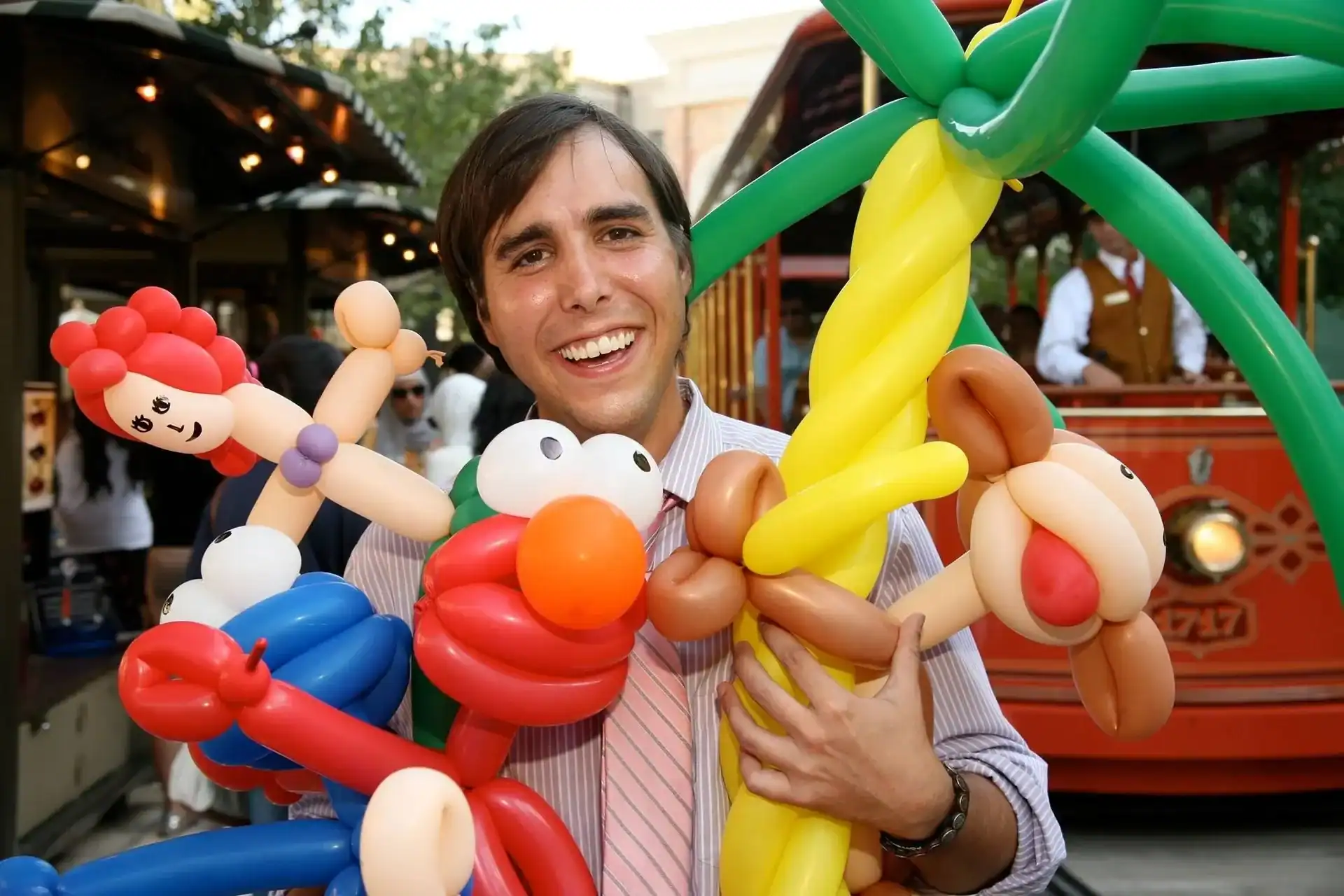
A balloon artist typically focuses on the creative and sculptural side of things, like balloon animals. These are the people building three-dimensional installations, custom figures, and even large-scale pieces that function more like event architecture than decor.
A balloon decorator tends to focus on the overall environment, managing the full scope of a space, from concept to installation to the final walkthrough.
A balloon designer or balloon stylist often bridges both, bringing a strong visual direction to how balloons interact with the rest of the event’s aesthetic.
There are also formally certified professionals in the field. For over three decades, the Qualatex Balloon Network’s Certified Balloon Artist (CBA) designation was the most widely recognized credential in the industry, requiring candidates to pass written exams and a rigorous four-hour practical test before earning the title. Qualatex ceased operations in July 2024, marking the end of an era for the balloon industry, but the CBA credential still carries weight as a signal of serious training and professional commitment for those who hold it. Other certification pathways have since emerged, including the Certified Balloon Professional (CBP) program offered by the Balloon Training Institute, keeping professional development accessible for decorators entering the field today.
In everyday use, the titles overlap and most professionals use more than one depending on the context. What matters more than the label is the level of skill, creativity, and professionalism behind it.
The shift did not happen overnight. It was gradual, and it was driven by a combination of evolving technique, better materials, and a change in how people think about event spaces.
For a long time, balloon decor was associated almost exclusively with children’s parties and casual celebrations. Simple arches, helium centerpieces, and color-matched bouquets were the standard. They served their purpose, but they were not pushing anything forward creatively.
That started to change as decorators began experimenting with organic design, layering balloons of different sizes and finishes to create installations with texture and movement. What came out of that experimentation looked different from anything the industry had produced before. Arches started appearing at weddings. Ceiling installations showed up at corporate events. Brand activations began incorporating oversized balloon sculptures as a central visual element.
The craft grew alongside the demand, and the demand kept growing.
It would be difficult to overstate how much platforms like Instagram and Pinterest have shaped where balloon decor is today. Social media and DIY culture have been the driving force behind more creative designs and over-the-top balloon decor, pushing decorators to keep raising the bar on what they produce.
The logic is straightforward. A well-executed balloon installation photographs beautifully. Guests share those photos. Other hosts see them and want something similar for their own event. The decorator gets inquiries. The work gets more ambitious. The cycle continues.
This visibility also changed the expectations clients bring to consultations. People now arrive with reference images, mood boards, and very specific ideas about what they want. That is good for the industry overall. It means clients are more invested in the design process, and it gives decorators more to work with creatively.
The numbers behind balloon decor tell a clear story. The global decorative balloon market was valued at nearly $5 billion in 2024 and is projected to reach $8 billion by 2035, growing at a steady rate of 4.4% annually. That kind of sustained growth does not happen by accident. It reflects a real shift in how events are designed and what clients are willing to invest in.
New developments in balloon design, including 3D structures, LED lighting, and eco-friendly materials, have made balloon decor more appealing than ever, especially in a social media-driven culture where visually striking events are widely shared and celebrated.
Personalization is also playing a bigger role than it did even a few years ago. The trend of personalization continues to rise, as consumers look to reestablish celebrations of significant events with family and friends, with everything focused on making someone feel extra special. Custom color palettes, brand-matched installations, and designs built around a specific theme or person have become the expectation rather than the exception.
The range of what is being created right now is genuinely impressive. A few of the trends leading the way:
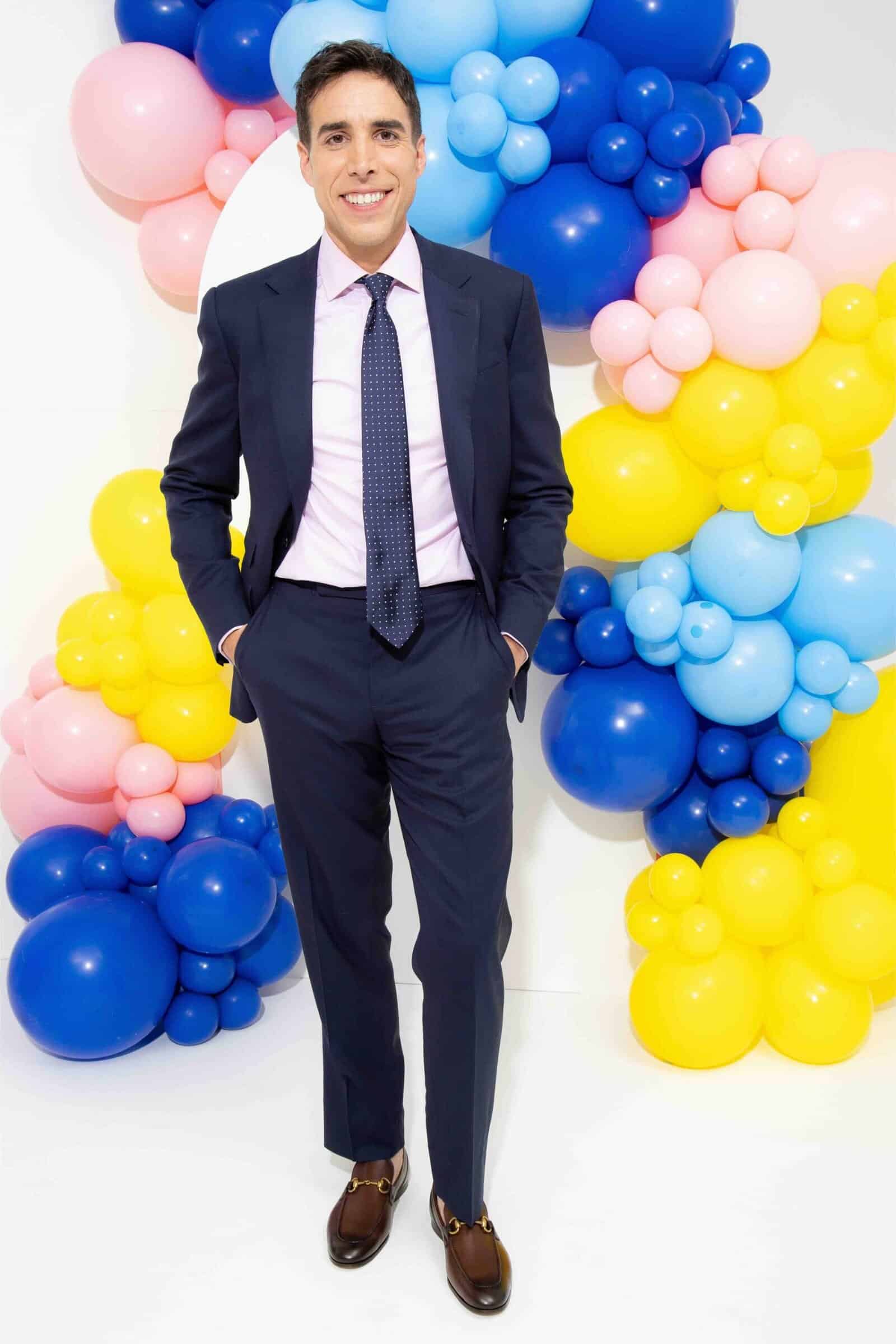
Organic balloon garlands remain one of the most requested styles for baby showers, milestone birthdays, and branded corporate entrances. Valued for their flowing, natural appearance and the way they adapt to almost any aesthetic, from minimalist to maximalist. A well-constructed balloon garland is often the most versatile choice available to decorators working across different aesthetic briefs.
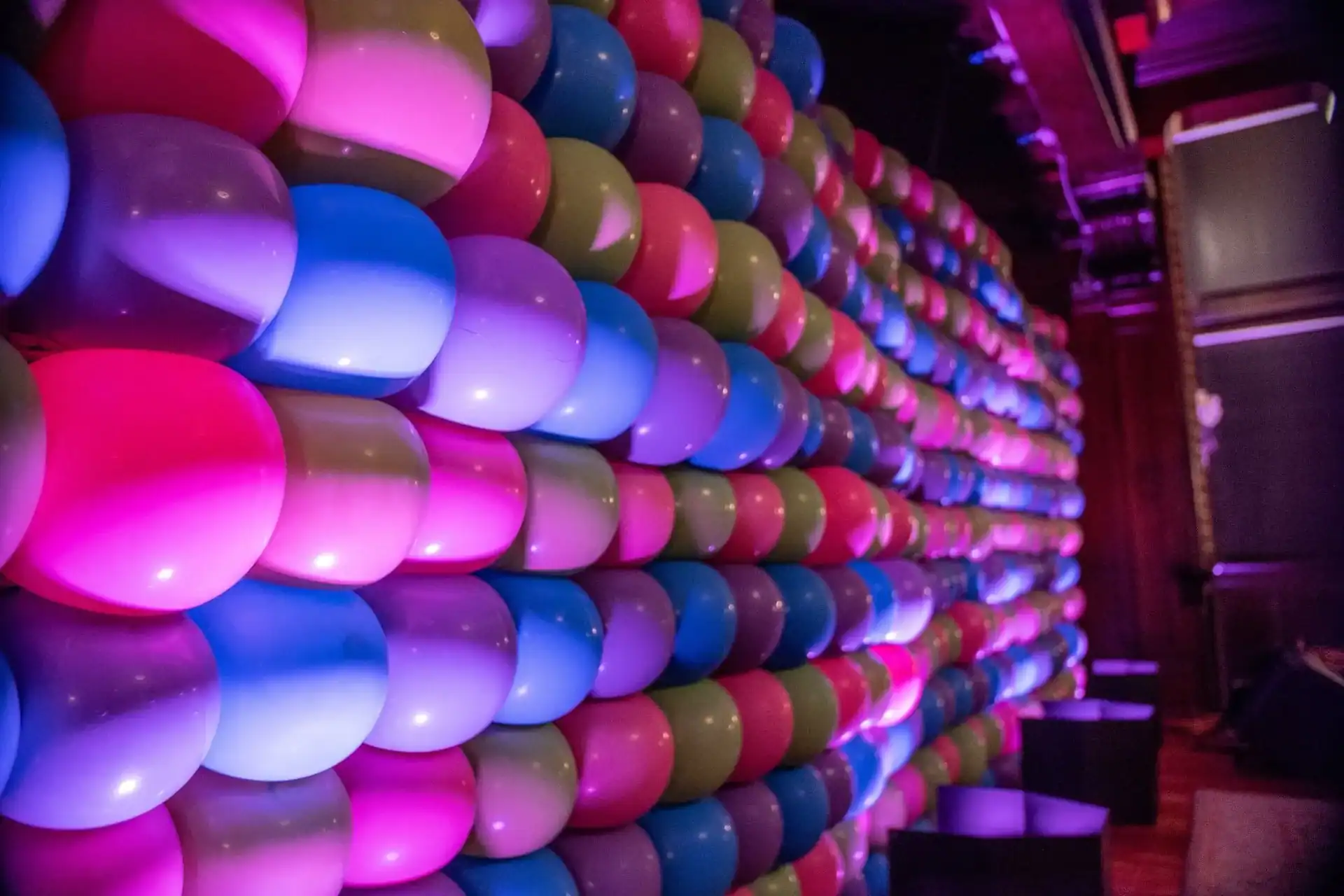
Ceiling installations have become a signature move for decorators looking to transform a venue from the top down. Hanging balloon arrangements create dramatic visual interest overhead and can be designed in various styles, from cascading clusters to suspended spirals, making them ideal for creating immersive environments.
Eco-friendly options are increasingly part of the conversation. Balloon artists and decorators are working to reduce plastic waste by using more sustainable materials, and many companies now offer recycling services to support responsible balloon disposal.
Interactive installations are also on the rise, with decorators designing spaces that guests can actually engage with, walk through, or use as photo backdrops. The goal isn’t just to decorate a room but to create an experience inside it.
Metallic and chrome finishes continue to evolve, with high-shine tones like rose gold, platinum silver, and deep bronze being used to create balloon walls, arches, and installations that catch the light and add a polished, reflective effect.
One of the reasons balloon decorations have held their ground so well is their flexibility. They work at intimate birthday dinners and large-scale brand activations. They fit casual backyard celebrations and formal corporate galas. With the right decorator, they can be whimsical, elegant, bold, understated, or anything in between.
They’re also highly practical from an event planning standpoint. Balloons can be installed the morning of an event and removed cleanly afterward. They don’t require the venue modifications that some other decor options do. And they tend to deliver strong visual impact at a price point that makes sense for a wide range of budgets.
For all of those reasons, balloon decorators have moved from a niche category into a core part of how thoughtful events get planned.
What often gets overlooked in conversations about balloon decor is the amount of skill involved in doing it well. A professionally executed installation requires spatial reasoning, color theory, structural knowledge, and an understanding of how design interacts with a specific venue. The best balloon decorators bring all of that together, and they do it under the time pressure of event-day logistics.
The profession has grown up alongside the craft. There are now dedicated industry conventions, certifications, training programs, and a global community of decorators who share techniques, compete in design challenges, and push each other’s work forward. That kind of professional infrastructure matters. It is part of what has elevated the quality of work clients can access.
Balloon decorators are not a novelty or a trend. They’re a legitimate and growing part of the events industry, and the work they produce has earned its place in spaces that once would have considered it out of scope.
Want to add a pop to your next event? Contact us today.

Inquire
Tell us when and we'll take it from there. A member of our Los Angeles team will reach out to talk through your vision, venue, and budget.
Planning an event?
Tell us your date and vision. Our team texts you back within minutes.
 4.9 on Google · 68 reviews
Luxury Balloon Decorations & Event Entertainment in Los Angeles. The Balloon Guy creates custom balloon decorations, luxury balloon installations, and professional event entertainment for corporate events, brand activations, weddings, birthday parties, private celebrations, and community events throughout Los Angeles and Southern California.
189 The Grove Dr
Los Angeles, CA 90036By appointment only · Serving Los Angeles & Southern California
Mon – Sun · 9:00 am – 6:00 pm